“Embedded Value, Embedded Tax: Supreme Court’s Verdict Bridges Trade Tax and GST. The Continuing Legacy of Section 3F(1)(b) in the GST Era.
October 24, 2025
Amazon’s Trademark Battle with Polo the Lifestyle & Fashion Brand-Supreme Court Explains When Money Decrees Can Be Stayed Unconditionally”
October 24, 2025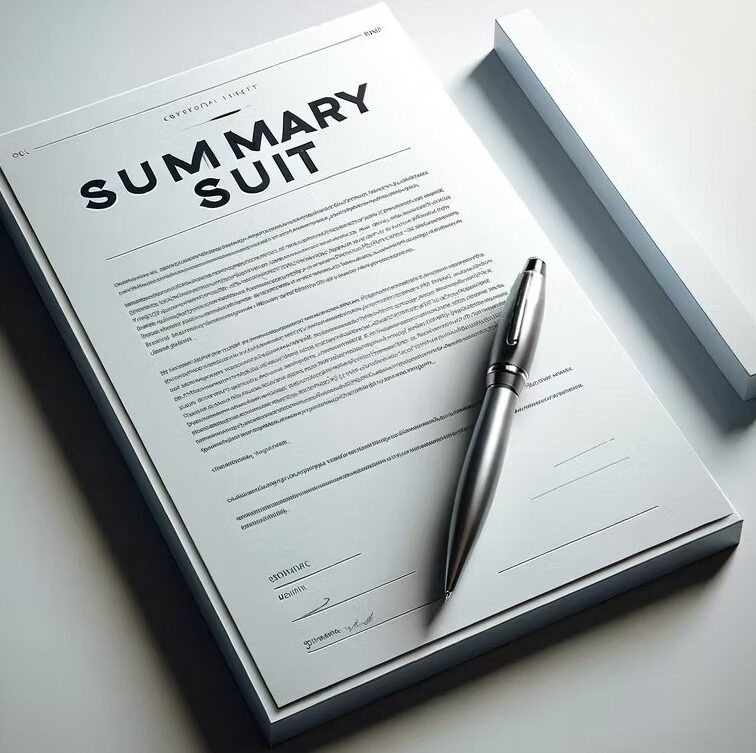
On 25 September 2025 Supreme Court of India in Executive Trading Co. Pvt. Ltd. v. Grow Well Mercantile Pvt. Ltd. (2025 INSC 1157) emphasizes that in a Summary Suit under Order XXXVII Civil Procedure Code ‘C.P.C.’ , a defendant cannot bypass the requirement of seeking leave to defend. Thus Filing a reply straightaway is impermissible.
📌 Background
The Appellant filed a Commercial Summary Suit under Order XXXVII CPC to recover over ₹2.15 crore with Interest. The defendant did not seek Leave to Defend but instead filed an application under the Commercial Courts Act and later attempted to file a Reply to the Summons for Judgment. The Bombay High Court permitted this reply, bypassing the Statutory Procedure.
🏛️ The Issue
Whether the Bombay High Court was correct in permitting the Defendant to file a Reply to the Summons for Judgment without filing a proper Application for Leave to Defend (as required under Order XXXVII Rule 3(5) CPC) ?
⚖️Supreme Court’s Findings
Order XXXVII CPC is special and strict-The Defendant must Seek Leave to Defend by disclosing a Substantial Defence. Allowing a reply without leave erases the distinction between Ordinary Suits and Summary Suits. Such procedural deviation goes to the root of the matter.
📝 Decision
The Supreme Court set aside the High Court’s order but with a liberty as Defendant still has the option to seek condonation of delay and apply for Leave to defend
🔑 Key Takeaway
The ruling reinforces that Order XXXVII CPC cannot be diluted. In summary suits, Leave to Defend is Mandatory—A Reply without Leave is Procedurally Invalid.